Antalya hair transplant aftercare for UK patients must cover safe travel home, written clinical instructions and a clear plan for seeking help if complications occur. This guide explains the practical questions to ask before booking treatment abroad.
Why returning to the UK changes aftercare planning
Antalya hair transplant aftercare for UK patients should be organised before the operation, not improvised at the airport. A patient may spend several nights near the clinic and then continue recovery in Britain without the original medical team nearby. That distance makes written instructions, a clinician’s contact details and a sensible escalation plan particularly important. The first days after surgery may involve swelling, crusting and discomfort, while the cosmetic result takes many months to develop. This article explains practical questions for a British traveller rather than promising a universal recovery timeline. The treating clinician must personalise washing, medication and activity advice after examining the scalp.
Confirm the medical team and procedure record
Before leaving the clinic, ask for the names and professional roles of the clinicians responsible for assessment, extraction, recipient-site creation and implantation. A medical summary should identify the technique, date, graft count recorded during treatment, any complications, medications supplied and the post-operative instructions. The plan should explain who may answer questions from the UK and when a face-to-face examination might be necessary. Do not assume that a salesperson or travel coordinator is qualified to diagnose infection from a photograph. The ISHRS advises patients to establish who performs surgical steps and how medical responsibility is maintained. Keep the summary in a secure place for your GP or a specialist if required.
The first night after surgery
A fresh surgical area requires careful protection from accidental contact, rubbing and contamination. The treatment team should explain the recommended sleep position, whether any dressing is used and how to manage expected minor oozing. Instructions can differ according to the number and locations of grafts, the donor technique and the patient’s medical history. Do not follow a stranger’s social-media checklist instead of your written care plan. If there is excessive bleeding, severe or increasing pain, a rapidly enlarging swelling or other unexpected symptoms, seek prompt medical advice. The first night’s priority is recovery and understanding how to contact the clinical team, not sightseeing or swimming.
Washing and crust management
Clinics commonly provide a supervised early wash or a demonstration before patients travel home, but the exact day and products vary. Ask the team to show how water pressure, hand contact and product application should be managed for your specific surgery. Crusts should not be forcibly removed; aggressive rubbing may injure a healing scalp. Patients should not assume the same guidance applies to both the donor and implanted areas. Obtain instructions in writing, including the names of products and the point at which ordinary washing may resume. A brief video demonstration from the clinic may help, but it cannot replace assessment if redness, discharge or worsening pain appears.
Understanding swelling and discomfort
Some swelling, tightness and tenderness are common after transplantation, but the amount and duration differ. The NHS notes that people may experience an achy or swollen scalp for several days, temporary scabbing and small scars. This does not mean every symptom is normal. Severe worsening pain, spreading redness, fever, pus, unexpected bleeding or a rapidly progressive reaction warrants urgent assessment. Patients should not treat internet advice as permission to ignore symptoms. Ask the treating clinic how to contact a qualified clinician, particularly outside its opening hours. In the UK, use appropriate urgent healthcare services if a serious problem develops rather than waiting for a routine message.
Before boarding your flight
Airline cabin policies, hand luggage, airport queues and boarding procedures can make the return journey more tiring than expected. Ask your doctor whether you are fit to fly on your particular date and whether any complication changes that decision. Avoid pressure on the newly treated area from tight headwear or a low overhead compartment. Any permitted loose hat must follow the clinical team’s guidance rather than an assumed universal rule. Keep medicines, aftercare instructions and the clinic’s contact details with you. A long or connecting flight requires special planning if the patient has other health conditions, restricted mobility or medications affecting travel safety.
Medication and existing health conditions
Patients should disclose all regular medicines, supplements, allergies and relevant diagnoses during the pre-operative assessment. Blood-thinning medicines, immune suppression, diabetes or other health conditions require individual medical decisions. Never stop prescribed aspirin, anticoagulants or other essential medicines on the advice of a marketing page. Any alteration should be coordinated with the prescribing clinician and the treating medical team. Similarly, do not start leftover antibiotics or use unapproved topical products during recovery. Request a clear list of prescribed medicines, doses and potential side effects before returning home. A UK clinician should be able to read the documentation if advice or urgent assessment becomes necessary.
Physical activity and work after returning home
Patients with physically demanding jobs may need a different recovery plan from people who work remotely. Sweating, heavy lifting, bending, headwear and risks of contact with the scalp can affect the timing of returning to activities. The treating clinician should establish specific restrictions rather than give a one-size-fits-all promise that every person can work the next day. If your job requires a helmet or hard hat, raise this well before booking because protective equipment may press directly on the healing area. Ask when exercise, gym activity and contact sports can resume, and what symptoms should prompt you to stop. Employer absence requirements may also affect suitable travel dates.
Swimming, sun and the Antalya climate
Antalya’s coastal climate can make swimming and direct sunlight tempting, but the early recovery period is not the right time to assume beach activities are safe. The clinician should advise when immersion in pools or sea water may resume and how to manage the scalp in strong sunshine. Water hygiene, exposure and contact with the recipient area are relevant considerations. Do not use ordinary sunscreen or tight hats directly on a fresh transplant without professional guidance. A hotel with shaded indoor spaces and an easy route to the clinic may be more suitable than a beach club during the immediate recovery period. Our local Antalya recovery travel guides provide additional context.

Shedding, temporary changes and long-term growth
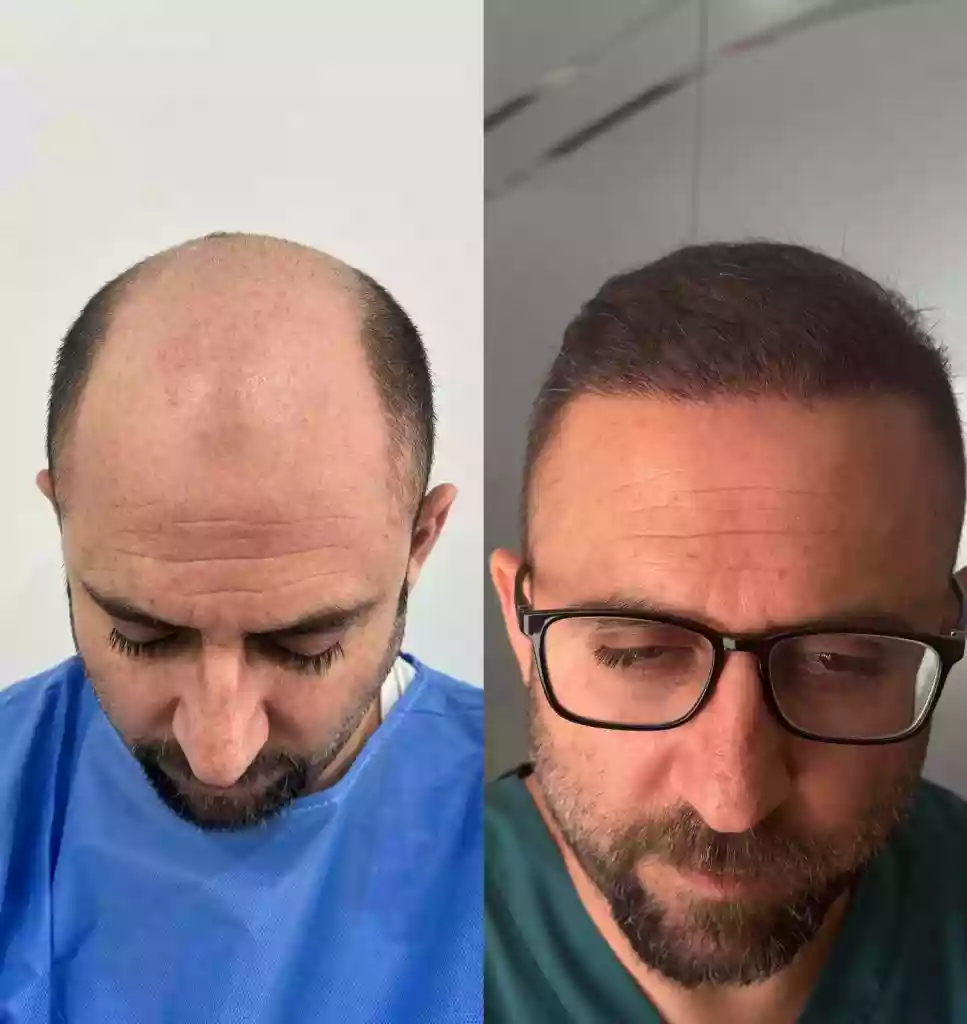
Transplanted hairs commonly pass through a period of shedding before new growth becomes visible. That early appearance can worry patients who expected an immediate cosmetic transformation. Hair growth, density and the final appearance vary by person, graft characteristics, donor supply, underlying hair loss and treatment factors. An indicative timeline can help patients understand why the first photographs are not a final result, but a clinician should interpret actual progress. Existing native hair may continue to thin around the transplant, which matters for future planning. Do not interpret one online before-and-after image as a guarantee or assume every patient follows the same month-by-month schedule.
What photos to send from the UK
Remote follow-up is useful when the clinic specifies consistent photo angles and lighting. Ask which views to submit, how frequently, which symptoms to describe and which communication channel protects your information. Photograph the donor area as well as the recipient area when requested. Avoid applying cosmetic filters or changing lighting dramatically between updates because that makes comparisons less reliable. An image does not always reveal infection, poor blood supply or other complications, so remote messaging cannot replace an in-person examination where clinically needed. The medical team should explain who reviews the images, expected response arrangements and when the patient should seek a UK clinician’s assessment.
Getting help if something seems wrong
For severe or unexpected symptoms, seek appropriate clinical care promptly rather than relying on an overseas WhatsApp reply. The NHS advises contacting the original hair transplant clinic for severe pain or unexpected symptoms, while UK services may need to assess urgent medical problems. Inform the local clinician that you have undergone recent surgery overseas and show your treatment summary and medication list. A complication can require wound examination, laboratory tests or treatment beyond what photographs can establish. Before booking abroad, ask the provider what happens if follow-up care is needed in Britain and whether any remote support is included. Do not assume private UK treatment would be free or covered by travel insurance.
Routine follow-up versus emergency care
A routine progress update is not the same as urgent assessment of a problem. The first may involve photographs, scalp hygiene questions and general healing observations; the second requires qualified medical judgement and potentially face-to-face care. Patients should ask the clinic to distinguish these routes. If the team offers reviews at particular milestones, agree in advance on dates and what information will be requested. A planned review can help track change, but it does not prove that growth will reach a certain percentage at a fixed month. Keep the correspondence and clinical documents together so the patient’s record remains coherent if different healthcare professionals become involved.
UK travel insurance and medical tourism
Ordinary holiday travel insurance may exclude elective procedures, related complications or later treatment, so coverage should be checked explicitly and in writing. The UK Foreign, Commonwealth and Development Office warns that medical tourism providers have a financial interest in treatment bookings and advises independent research and discussion with a clinician at home. A patient should ask an insurer about treatment-related incidents, travel disruption and the cost of extending a stay. A health-tourism package should not be described as insurance merely because it includes a hotel and airport transfer. Understand who pays for unexpected nights, flights or medical care before paying a deposit.
Choosing a realistic recovery hotel
A post-operative hotel should support rest and straightforward transport to the clinic rather than prioritise nightlife or direct beach access. Consider a quiet room, clean facilities, lift access, suitable bedding and reliable communication. If a companion is travelling, ask whether the room arrangement is appropriate for both people. The distance from the clinic to the hotel should be confirmed in normal traffic, not assumed from a city-level address. A short, predictable journey can help on the washing or review day. Our Antalya medical accommodation guide and airport transport guide cover practical local considerations.
Checklist before confirming a treatment booking
Request the treating facility’s identity, the clinical team’s names and roles, a preliminary but non-binding graft assessment, expected number of nights, written treatment inclusions, medication and wash arrangements, and an explanation of complications and aftercare. Ask who will be your named clinical contact after returning to the UK and how a UK-based urgent assessment might be coordinated if needed. Compare the original quotation with the final consent form and do not accept pressure to decide immediately. For background on clinical risk, consult the NHS hair transplant guide and GOV.UK medical tourism advice.
Frequently asked questions
Can I fly back to Britain immediately?
Only your treating clinician can determine whether your travel timing is suitable.
Is early shedding a failed transplant?
Not necessarily; shedding can be part of the normal growth cycle, but individual progress needs clinical interpretation.
Can a photograph diagnose infection?
No. Concerning symptoms may need a physical examination.
Should I stop aspirin before treatment?
Never stop a prescribed medicine without coordinated advice from qualified clinicians.
Will UK travel insurance cover complications?
Not automatically. Ask the insurer about elective treatment and related exclusions.
Is final density guaranteed after twelve months?
No. Outcomes vary and may continue to develop at different rates.
Request a personalised aftercare explanation
Patients considering Antalya hair transplant aftercare for UK patients can ask the medical team to explain the planned wash, recovery appointments, return flight and follow-up communication before reserving travel. Share relevant medical history securely and obtain advice from a qualified clinician. Read our general recovery guide, donor recovery article and three-day treatment journey for related topics. This article is general information rather than a diagnosis or medical advice. Results and recovery vary from person to person.