Eyebrow Transplant Procedure in Taksim covers brow design, FUE graft extraction, implantation angles, recovery, growth and treatment planning.
Eyebrow Transplant Procedure in Taksim
EYEBROW RESTORATION • DESIGN • TAKSIM ISTANBULAn eyebrow transplant is a surgical hair-restoration procedure for selected people with naturally sparse brows, thinning, previous over-plucking, asymmetry or suitable areas of eyebrow hair loss.
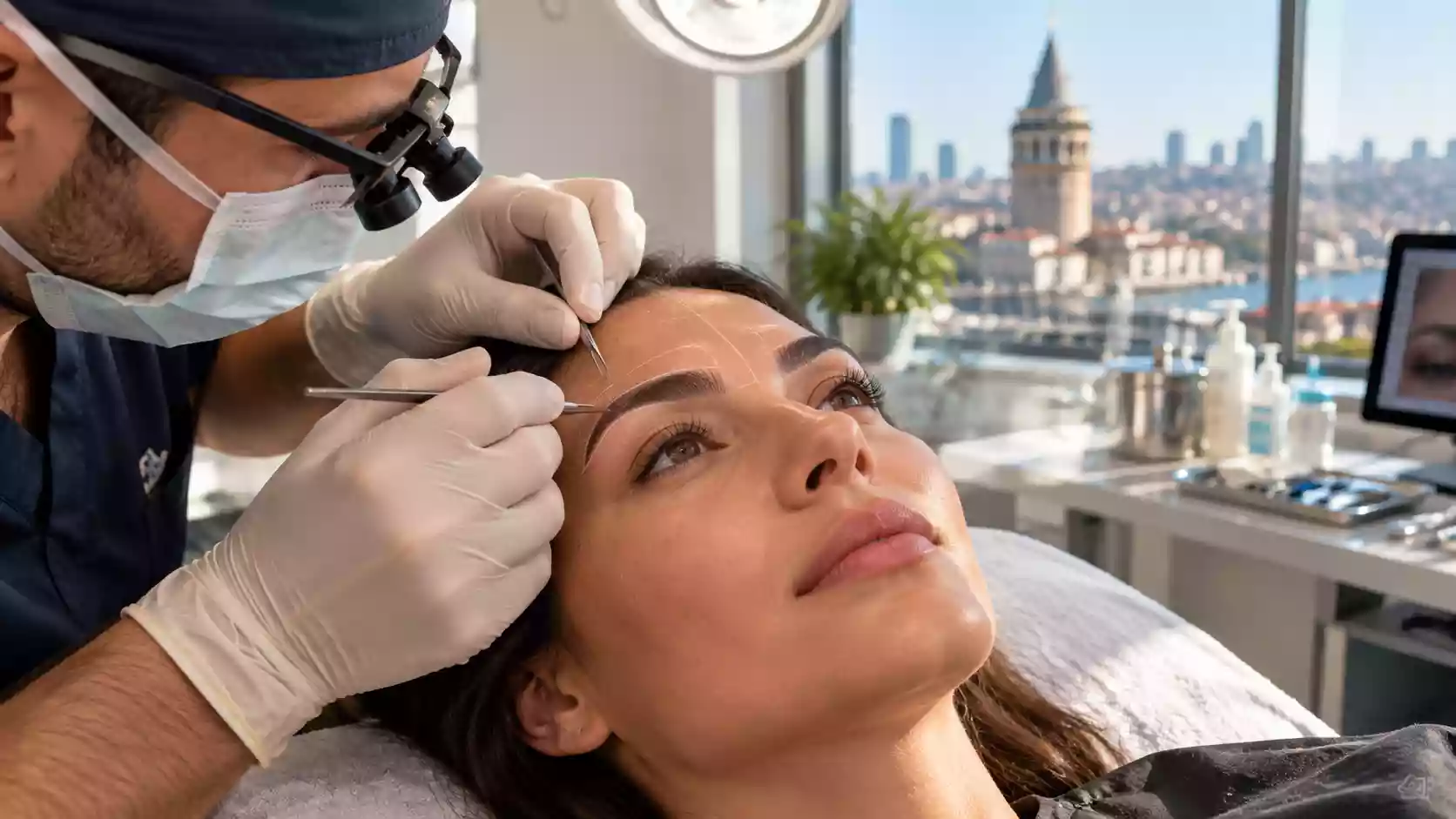
Unlike scalp transplantation, eyebrow restoration requires particularly careful control of shape, hair direction and placement angle. The objective is not simply to add grafts, but to integrate transplanted follicles with the natural architecture of the eyebrow.
 Eyebrow Transplant Procedure in Taksim
+
Eyebrow Transplant Procedure in Taksim
+ Candidate and Donor Assessment Before Eyebrow Transplantation
+
Candidate and Donor Assessment Before Eyebrow Transplantation
+Who May Consider an Eyebrow Transplant?
Eyebrow transplantation may be considered when eyebrow density is naturally low or has been reduced over time. The reason for eyebrow loss is important because not every type of thinning should automatically be treated with transplantation.
Naturally sparse eyebrows
People with naturally low eyebrow density may consider transplantation when donor hair and facial characteristics are suitable.
Long-term thinning after over-plucking
Selected areas that have remained sparse after repeated plucking may potentially be assessed for restoration.
Selected scars or previous trauma
Some scarred areas may be considered, although graft growth in scar tissue can be less predictable and requires individual assessment.
Asymmetry or localized thinning
Transplantation may sometimes be used to improve selected areas while maintaining a realistic relationship with existing eyebrow hair.
Eyebrow Architecture: More Than Drawing a Shape
Eyebrow design is not simply an outline that is filled with hair. Native eyebrow hairs change direction across different parts of the brow, and transplanted follicles need to be planned with this pattern in mind.
Planning Shape, Symmetry and Density
Perfectly identical eyebrows are not necessarily the goal. Natural eyebrows usually contain subtle differences, so planning should aim for facial balance rather than mathematical mirror-image symmetry.
The existing eyebrow is particularly useful when some native hair remains. Its direction, density and distribution can guide where additional follicles may be placed.
 Eyebrow Design, Symmetry and Density Planning
+
Eyebrow Design, Symmetry and Density Planning
+Eyebrow Transplant Procedure in Taksim: Step by Step
The exact workflow can vary between providers and individual cases. A typical procedure includes assessment, final design, local anaesthesia, donor extraction, graft preparation and careful placement into the eyebrow region.
Consultation and Assessment
The eyebrows, donor hair, medical history, reason for eyebrow thinning and treatment expectations are reviewed before the final plan is agreed.
Final Brow Design
The proposed eyebrow shape is marked and reviewed. Existing hairs, facial proportions, symmetry and realistic density are considered.
Local Anaesthesia
Local anaesthetic is commonly used to reduce discomfort during the procedure. Individual experiences during injections and treatment can vary.
Donor Extraction
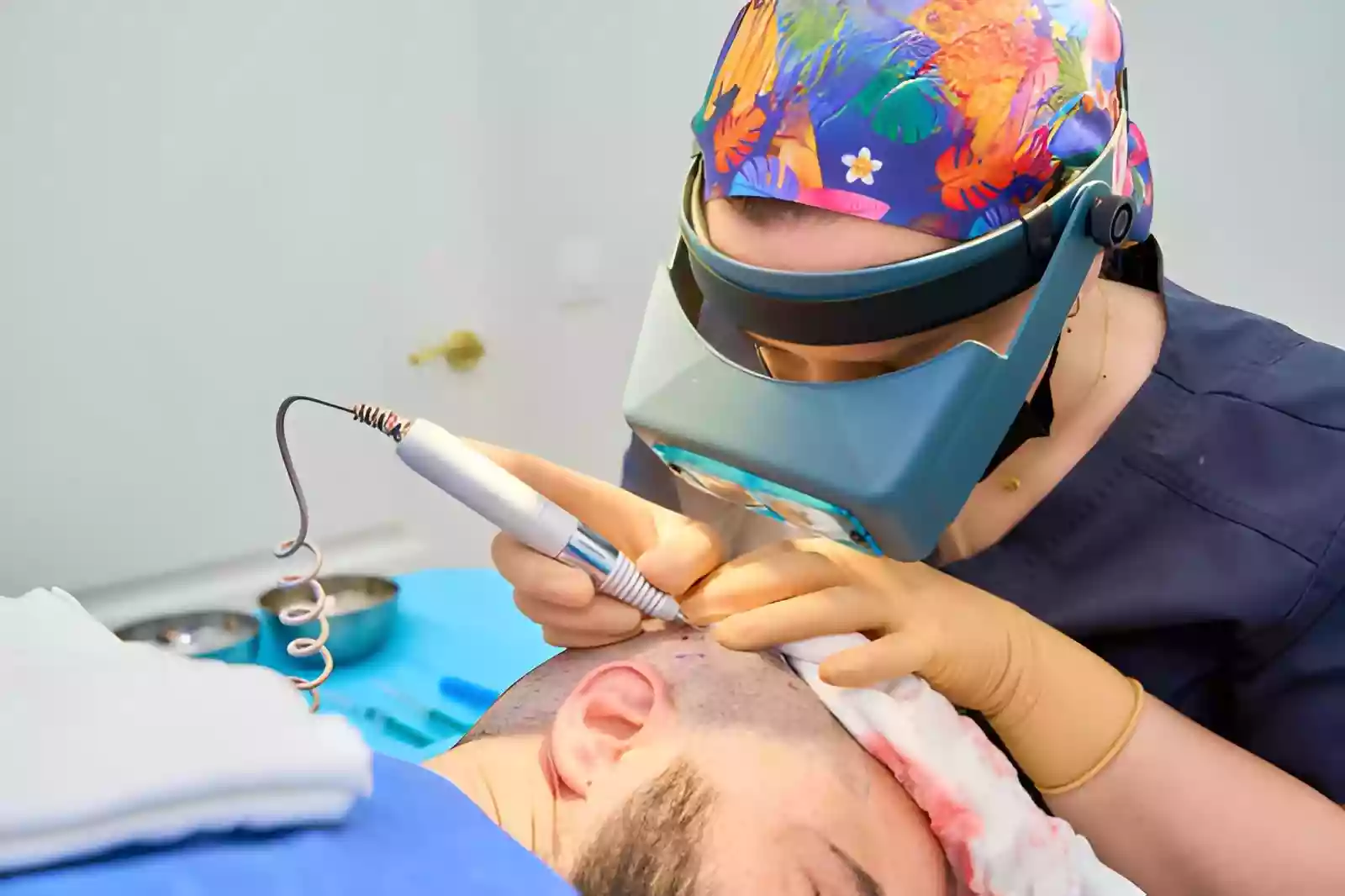
Selected follicular units are extracted from a suitable donor area using an FUE-based approach. Donor selection should consider hair characteristics as well as available density.
Graft Selection and Preparation
Suitable follicular units are prepared for the eyebrow area. Fine graft selection can be particularly relevant where delicate transitions are required.
Placement
The grafts are positioned according to the planned shape, density, direction and angle. The exact implantation method and team roles should be explained by the provider.
 Why Eyebrow Graft Direction and Angle Matter
+
Why Eyebrow Graft Direction and Angle Matter
+Why Direction and Implantation Angle Matter
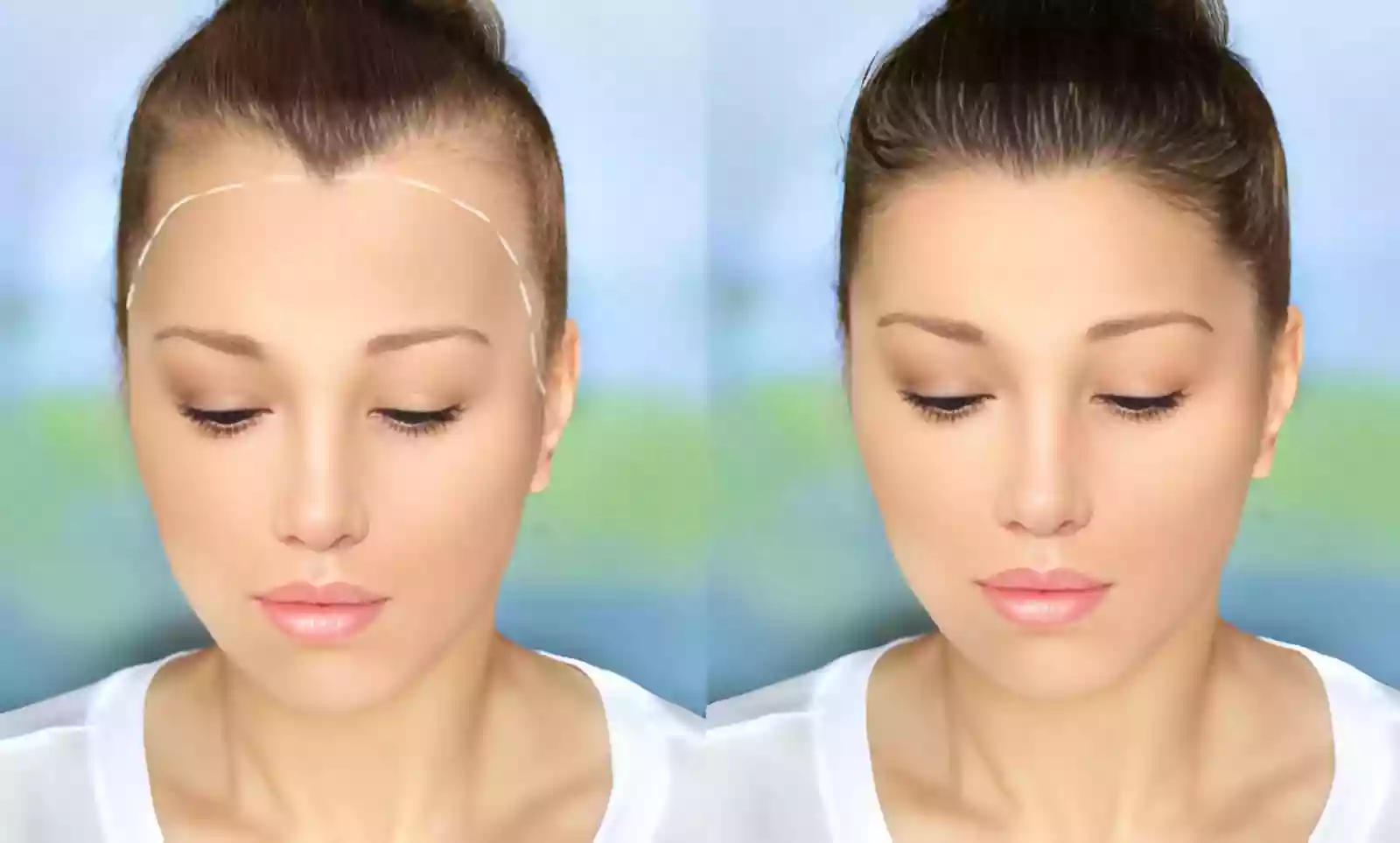
Eyebrow hair does not follow the same visual pattern as scalp hair. The direction changes across the brow and the hairs generally lie relatively close to the skin.
That means the implantation plan must consider the orientation of each section rather than simply filling an eyebrow-shaped area with follicles.
Recovery After an Eyebrow Transplant
Small crusts, redness and temporary swelling can occur during early healing. Transplanted hair shafts may later shed before new growth gradually develops from the follicles.
Redness and small crusts may be visible around transplanted follicles. Avoid rubbing, scratching or picking the eyebrow area.
Some transplanted hair shafts may shed during the post-transplant cycle. This does not by itself determine the final growth outcome.
New hairs may gradually begin to appear. Timing, coverage and density vary between individuals.
Growth and cosmetic maturation can continue over many months before the result is assessed more fully.
Eyebrow Transplant Aftercare
Early aftercare is designed to protect the implanted area while the skin heals. Instructions can differ according to the procedure and treating team, so personal post-operative guidance should take priority over a general online timetable.
 Eyebrow Transplant Aftercare and Early Recovery
+
Eyebrow Transplant Aftercare and Early Recovery
+Growth, Grooming and Long-Term Appearance
An eyebrow transplant uses living hair follicles, but the final appearance depends on donor-hair characteristics, graft growth, implantation direction, healing and the amount and pattern of existing eyebrow hair.
Transplanted hairs may initially shed
The visible hair shafts can shed after transplantation before follicles enter later phases of growth.
New growth develops gradually
Early hairs may become noticeable over subsequent months, while cosmetic maturation can continue for longer.
Periodic trimming may be required
When scalp follicles are used, transplanted hairs can retain characteristics of their donor site and may grow longer than native eyebrow hairs.
Natural balance matters more than perfect symmetry
Eyebrows are not normally exact mirror images. The visual objective is generally balance and integration rather than mathematically identical brows.
Eyebrow Transplant vs Cosmetic Brow Treatments
Eyebrow transplantation, microblading and brow styling are different approaches. They should not be treated as interchangeable procedures simply because they can all affect eyebrow appearance.
The appropriate option depends on the cause of thinning, desired appearance, donor availability and whether a person is considering a surgical or non-surgical approach.
Questions to Ask Before Choosing Eyebrow Transplant Care
Eyebrow transplantation requires attention to both medical planning and aesthetic detail. When comparing providers, useful questions are more informative than claims such as “best,” “perfect” or “guaranteed natural.”
An online photo review can help start this discussion, but final suitability and design should remain subject to appropriate in-person assessment.
Eyebrow Transplant Planning in Taksim, Istanbul
Taksim and the wider Beyoğlu area provide central access to accommodation, transport and other parts of Istanbul. This can make the logistics of an international treatment visit more convenient.
Location, however, should not be treated as evidence of medical quality. The responsible medical team, facility, eyebrow-specific experience, treatment planning and aftercare arrangements are more important clinical considerations.
Patients who want to begin with a remote assessment can also read our One-on-One Online Consultation guide before travelling.
View Taksim Square on Google Maps →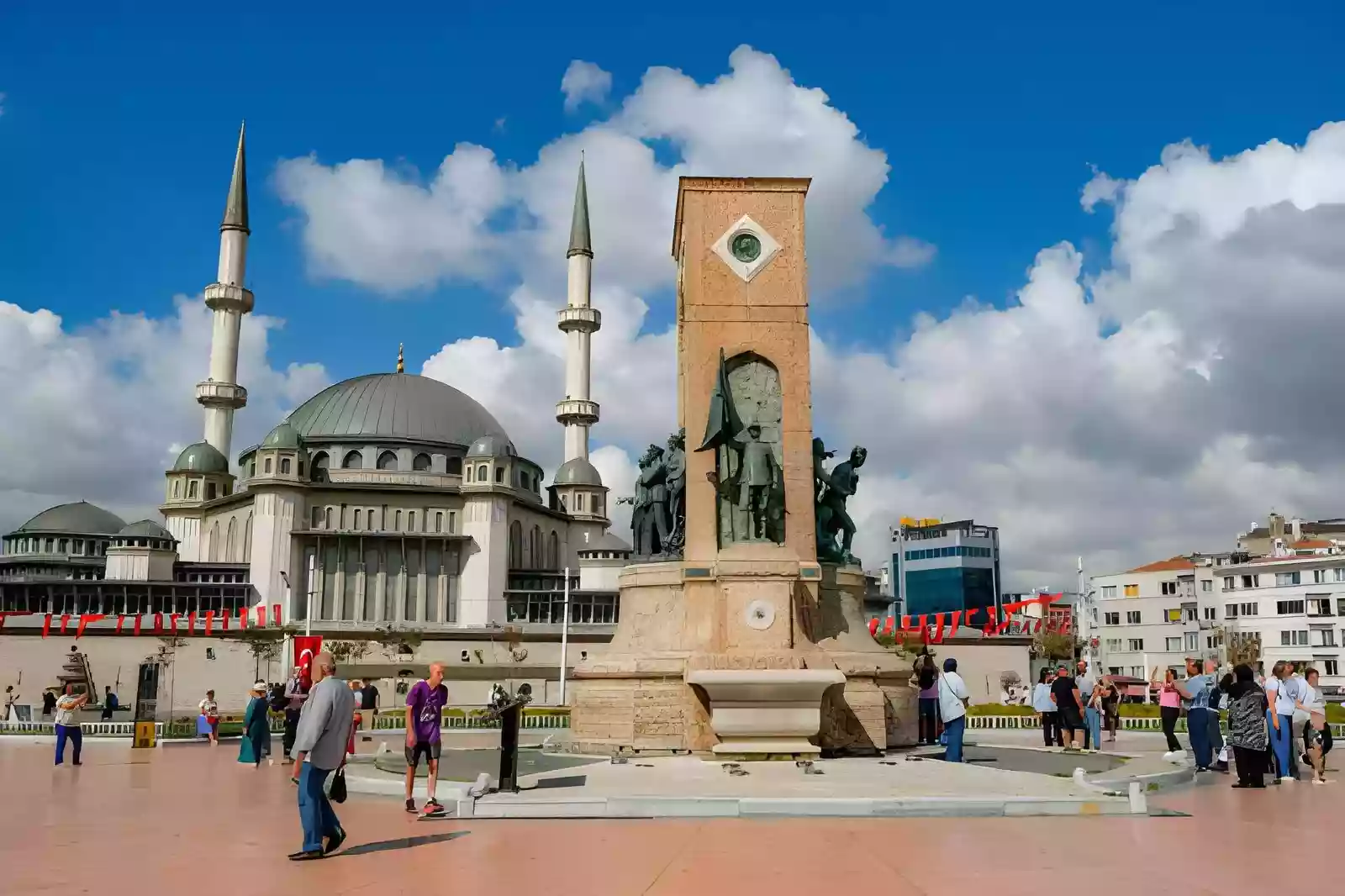 Eyebrow Transplant Procedure in Taksim, Istanbul
+
Eyebrow Transplant Procedure in Taksim, Istanbul
+Eyebrow Transplant Procedure in Taksim: Frequently Asked Questions
01What is an eyebrow transplant?
02Can an eyebrow transplant look natural?
03Is an eyebrow transplant painful?
04Where is donor hair taken from for an eyebrow transplant?
05Will transplanted eyebrow hairs need trimming?
06When does eyebrow transplant growth begin?
07Can eyebrow transplantation be performed over a scar?
08Can online photos confirm my final eyebrow design and graft number?
Eyebrow Transplant Procedure in Taksim: Individual Planning Matters
A well-planned Eyebrow Transplant Procedure in Taksim involves more than increasing eyebrow density. Donor-hair selection, facial proportions, existing brow direction, implantation angle, realistic density and long-term grooming all influence the final appearance.
Patients should approach eyebrow transplantation as an individualized medical and aesthetic procedure. Preliminary photographs can help begin the planning process, while final suitability, brow design and graft placement strategy should be confirmed after appropriate in-person assessment.