
Antalya’s Historical Significance – From Ancient Roman Roots to the Byzantine Era
Discover the rich history of Antalya, from its Roman heritage to the Byzantine era. Explore how this Mediterranean gem evolved as a strategic city, blending cultures and empires throughout history.
🏛️ Ancient Beginnings of Antalya
Antalya, located on the Mediterranean coast of southern Turkey, is a city with roots stretching back thousands of years. Known in antiquity as Attalia, it was founded around 150 BC by King Attalus II of Pergamon. This strategic location, sheltered by the Taurus Mountains and bordering the Mediterranean Sea, made it a hub for trade, culture, and military operations.
During the Roman period, Antalya grew in prominence due to its fertile lands, natural harbors, and access to inland trade routes. The city became part of the Roman Empire, serving as an administrative and commercial center. It was connected by roads to major cities such as Perge, Aspendos, and Side, which facilitated commerce and cultural exchange across the region.
🌍 Roman Influence and Urban Development
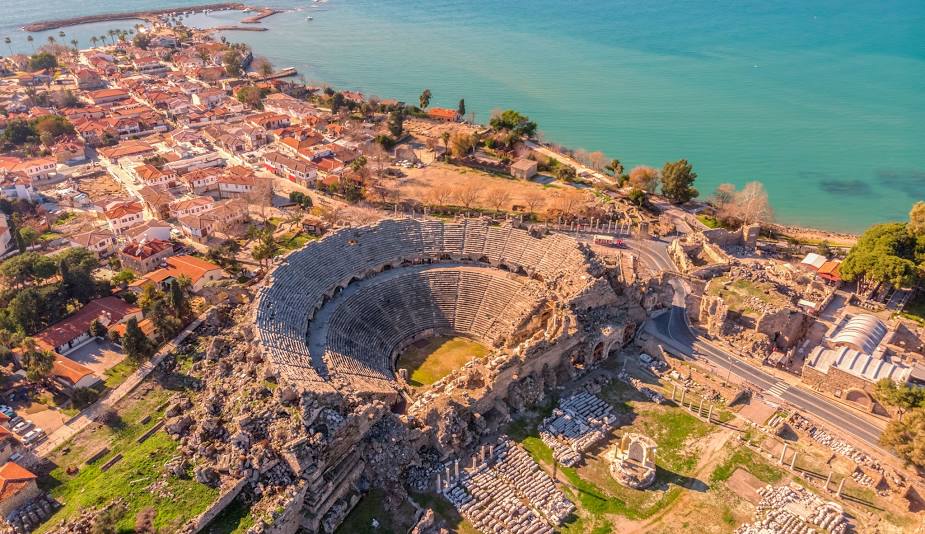
Under Roman rule, Antalya experienced significant urban development. Amphitheaters, temples, aqueducts, and baths were constructed, reflecting the empire’s architectural style. The Roman theater of Aspendos, one of the best-preserved theaters in the world, remains a testament to this period.
The city also thrived as a maritime trade hub, exporting agricultural products, textiles, and olive oil across the Mediterranean. These developments solidified Antalya’s reputation as a critical Roman outpost in the region.
🕍 Byzantine Era Antalya
After the division of the Roman Empire in 395 AD, Antalya became part of the Eastern Roman Empire, later known as the Byzantine Empire. During the Byzantine era, the city’s defensive and administrative importance increased.
The Byzantines reinforced Antalya’s fortifications, building walls and watchtowers to protect the city from invasions by pirates, Persians, and later Arab forces. Churches and monasteries were established, reflecting the growing influence of Christianity in the region. These structures marked Antalya as a significant religious and cultural center during the Byzantine period.
⚓ Strategic and Commercial Importance
Antalya’s position along the Mediterranean coast made it a vital commercial and military hub. Trade routes connecting the interior of Anatolia with maritime routes passed through the city. Its harbors facilitated exchanges with other parts of the Roman and Byzantine Empires, including Alexandria, Rome, and Constantinople.
The city became a melting pot of cultures, with Greeks, Romans, Byzantines, and later Turks leaving their mark. This cultural fusion is evident in the city’s ancient ruins, mosaics, and architectural styles.
🏰 Architectural and Cultural Heritage
Several historical structures in Antalya still showcase its Roman and Byzantine legacy:
- Hadrian’s Gate (Hadrian Kapısı): Built in honor of Roman Emperor Hadrian’s visit in 130 AD, this gate is a stunning example of Roman architecture.
- Hidirlik Tower: A Byzantine watchtower that exemplifies the city’s defensive strategies.
- Kaleiçi (Old Town) Walls: Sections of Byzantine fortifications remain, blending Roman engineering with later Ottoman modifications.
These landmarks highlight how Antalya evolved from Attalia to a Roman and Byzantine stronghold, preserving centuries of layered history.
🧭 Antalya’s Role in Mediterranean History
Throughout the Roman and Byzantine periods, Antalya was more than just a city — it was a strategic gateway between the East and West. The combination of fertile plains, strategic harbors, and mountain defenses made it indispensable for imperial logistics, commerce, and cultural exchange.
Merchants, scholars, and travelers contributed to the city’s dynamic character, ensuring that Antalya remained a key player in the Eastern Mediterranean world.
🔱 Transition to Later Periods
While Roman and Byzantine influence dominated Antalya for centuries, the city eventually came under Seljuk and Ottoman control in the late medieval period. Despite political changes, the historical legacy of Roman and Byzantine Antalya continues to define the city’s cultural and architectural landscape.
Modern Antalya, often celebrated as a tourist destination, owes much of its charm to this rich past. Ancient theaters, gates, and fortifications attract historians and travelers alike, offering a glimpse into the city’s strategic and cultural significance over the centuries.
🧾 Conclusion – Antalya’s Enduring Legacy. History
Antalya’s history is a testament to its enduring strategic, cultural, and commercial importance. From its origins as Attalia through its rise under Roman rule and prominence during the Byzantine era, the city has been a bridge between empires, continents, and civilizations.
Exploring Antalya today means walking through layers of history — Roman streets, Byzantine churches, and Ottoman houses — all of which tell the story of a city that has survived and thrived for over two millennia.
Its combination of natural beauty and historical richness ensures that Antalya is not only a Mediterranean paradise but also a living museum of Roman and Byzantine heritage.