
Post-Operative Hair Transplant Guide by Micro FUE Turkey: Medications, Photo Instructions & Recovery Tips
Meta Description: Discover the complete Micro FUE Turkey post-op photo guide. Learn about aftercare, medications, swelling, hair wash techniques, and physical activity guidelines for a smooth hair transplant recovery.
Hair transplantation is a transformative procedure, especially when done by professionals like Micro FUE Turkey, a leading name in medical tourism. However, the success of a hair transplant doesn’t rely solely on the surgery itself—it heavily depends on post-operative care. This comprehensive guide reveals what’s inside Micro FUE Turkey’s Post-Op Guide, detailing medications, daily care routines, and lifestyle adjustments to ensure a successful recovery.
What’s Inside Micro FUE Turkey’s Post-Op Guide?
When patients choose Micro FUE Turkey for their hair restoration journey, they receive a structured, easy-to-follow post-operative manual. The guide includes:
Medications & Post-Op Photo Timeline
Hair Wash Instructions
Swelling & Haircut Advice
Daily Activities & Life Routine Recommendations
This structured format ensures patients know what to expect and how to handle each stage of their recovery process.
Essential Medications After Hair Transplant
Post-surgery medications are critical for preventing infection, reducing pain, and promoting healing. Micro FUE Turkey provides a detailed medication regimen:
CIPRASID 500 mg Tablet (Antibiotics)
Purpose: Prevents infection
Dosage: 1 tablet after breakfast daily
Duration: Typically 5–7 days or as directed by the medical team
Parol (Pirofen) Tablet (Painkiller)
Purpose: Pain relief
Dosage: Only when needed, every 6 hours
Note: Do not exceed recommended dosage
OMESEK 20 mg Capsule (Gastroprotective)
Purpose: Protects the stomach lining from strong medications
Dosage: 1 capsule before breakfast
Prednol 16 mg (Anti-Oedema Steroid)
Purpose: Reduces swelling and inflammation
Dosage:
Day 1: 4 tablets
Days 2–3: 2 tablets daily after breakfast
Coraspin (Ecopirin) 100 mg Tablet (Blood-Thinner)
Purpose: Prevents blood clotting
Dosage: 2 tablets per day
1 in the morning
1 in the evening
Atarax 25 mg Film Tablet (Sleep Aid & Anti-Anxiety)
Purpose: Helps with sleep and post-op anxiety
Dosage: 1 tablet before bed (around 30 minutes before sleeping)
Important Note: Always follow the instructions of your surgeon. Medication brands or names might vary.
The Importance of Medication Compliance
Following the medication guide is crucial to ensuring your hair grafts heal properly and infections are avoided. Failure to adhere to the prescribed regimen can delay healing or lead to complications. Micro FUE Turkey emphasizes patient education to guarantee each step is clearly understood.
Post-Op Photo Guide: Monitoring Your Healing
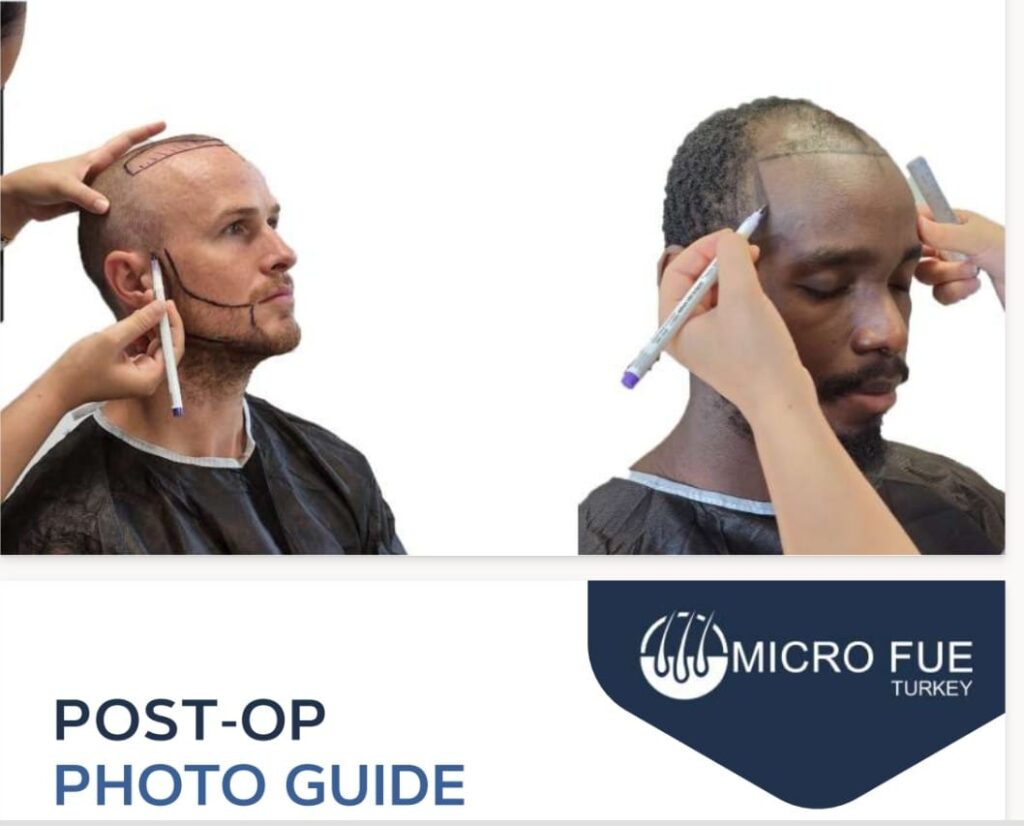
The Post-Op Photo Guide provided by Micro FUE Turkey helps patients track their recovery visually. Here’s a timeline of what to expect:
Day 1–3: Scabbing begins; donor and recipient areas may be swollen.
Day 4–7: Scabs thicken; itching may occur—do not scratch!
Day 8–14: Scabs begin to fall off naturally; shampooing begins.
Day 15–30: Hair shedding starts (shock loss); this is normal.
Month 1–3: New hair begins growing; results are not yet visible.
Month 6–9: 60-70% of new growth visible.
Month 12: Final results appear.
Hair Washing Instructions After Hair Transplant
Washing your hair post-surgery requires extra care. Micro FUE Turkey provides detailed guidelines starting from Day 3 or 4 after surgery:
Step-by-Step Washing Protocol:
Use Foam Lotion: Apply a foaming lotion or oil to the grafted area. Wait 20–30 minutes.
Rinse Gently: Use lukewarm water without pressure.
Use a Special Shampoo: Dab with the tips of your fingers; do not rub.
Dry Gently: Pat dry with a clean paper towel—no rubbing.
Avoid Hair Dryer: Allow hair to air dry for the first two weeks.
Frequency: Once daily, for at least 10 days, until all scabs are gone.
Managing Swelling After Hair Transplant

Swelling is a natural reaction post-transplant, especially in the forehead and eye area. Micro FUE Turkey recommends:
Use of Prednol: As prescribed, to reduce oedema.
Cold Compresses: On the forehead (never on the grafts).
Sleeping Position: Sleep at a 45° angle using multiple pillows for the first 4 nights.
Hydration: Drink plenty of water to speed up recovery.
If swelling persists beyond Day 5, contact your doctor immediately.
Guidelines for Haircut After Hair Transplant
Haircuts should be delayed until the grafts are fully secure. Micro FUE Turkey suggests:
Scissors Only: Wait at least 1 month before using clippers or razors.
Donor Area: Can be trimmed gently with scissors after 2–3 weeks.
Recipient Area: Avoid touching with blades for at least 3 months.
Always consult your clinic before proceeding with a haircut.
Daily Physical Activities & Life Routines After Surgery
Micro FUE Turkey provides these essential lifestyle tips to protect your new grafts:
Week 1:
Avoid bending over or lifting heavy items
No physical exertion or gym
Stay away from hot environments (sauna, steam rooms)
Week 2:
Light walking is allowed
No swimming in pools or the sea
Avoid hats unless specifically advised
Week 3–4:
You may begin light workouts
Avoid direct sun exposure—wear a loose cap if necessary
1 Month Later:
Resume normal activities
Still avoid contact sports until 3 months post-op
Why Choose Micro FUE Turkey?
Micro FUE Turkey is a trusted name in hair transplant procedures, combining advanced technology, experienced medical staff, and multilingual support for international patients. Their Istanbul and Bodrum clinics offer:
Ministry of Health-certified facilities
All-inclusive packages (accommodation, transfers, consultations)
Premium aftercare support and communication
Transparent pricing and medication guidance
Whether you’re from the UK, Europe, USA, or Canada, Micro FUE Turkey ensures a safe, guided, and result-oriented hair transplant journey.
Final Thoughts: Healing Is a Process
The journey to hair regrowth is gradual. By following Micro FUE Turkey’s structured Post-Operative Guide, patients can avoid complications, maximize results, and feel confident during each healing phase.
From the medication schedule to activity recommendations and washing procedures, this guide ensures you’re never alone in your recovery.